|
| std::expected< std::string, Error > | mqss::qrmci::chooseBackend (const mqss::QuantumTask &task, const BackendRegistry &availableBackends, BackendSelectionPolicy policy=BackendSelectionPolicy::LowestName) |
| | Choose the backend that should execute a quantum task.
|
| std::expected< void, Error > | mqss::qrmci::compileQuantumTask (mqss::QuantumTask &task, const BackendWrapper &backendInfo, mqss::mqssci::MQSSCompiler &compiler) |
| | Compile the quantum task using compiler.
|
| std::expected< void, Error > | mqss::qrmci::compileQuantumTask (mqss::QuantumTask &task, const BackendWrapper &backendInfo) |
| | Compile the quantum task with a compiler of this function's own, for callers that have no reason to own one.
|
| std::expected< mqss::QuantumResult, Error > | mqss::qrmci::buildQuantumResult (const mqss::QuantumTask &task, const std::vector< std::optional< mqss::submitter::Counts > > &histogram) |
| | Build a QuantumResult from a task and its job-result histogram, the shared tail end of submitQuantumTask()+collectQuantumResult() and executeQuantumTask().
|
| std::expected< std::vector< mqss::submitter::Job >, Error > | mqss::qrmci::submitQuantumTask (const mqss::QuantumTask &task, const mqss::submitter::Device &device) |
| | Submit the quantum task's circuits to the device without waiting for their results.
|
| std::expected< std::vector< mqss::submitter::Job >, Error > | mqss::qrmci::submitQuantumTask (const mqss::QuantumTask &task, const mqss::submitter::Device &device, const std::atomic< bool > &terminationFlag) |
| | Interruptible overload of submitQuantumTask(), for a daemon work loop composing its own termination flag.
|
| std::expected< mqss::QuantumResult, Error > | mqss::qrmci::collectQuantumResult (const mqss::QuantumTask &task, std::vector< mqss::submitter::Job > &jobs, std::chrono::seconds waitTimeout) |
| | Collect the results of previously submitted quantum jobs.
|
| std::expected< mqss::QuantumResult, Error > | mqss::qrmci::collectQuantumResult (const mqss::QuantumTask &task, std::vector< mqss::submitter::Job > &jobs, std::chrono::seconds waitTimeout, const std::atomic< bool > &terminationFlag) |
| | Interruptible overload of collectQuantumResult(), for a daemon work loop composing its own termination flag.
|
| std::expected< mqss::QuantumResult, Error > | mqss::qrmci::executeQuantumTask (const mqss::QuantumTask &task, const mqss::submitter::Device &device, std::chrono::seconds waitTimeout) |
| | Execute the quantum task on the device: submits it and collects its result in one call.
|
| std::expected< mqss::QuantumResult, Error > | mqss::qrmci::executeQuantumTask (const mqss::QuantumTask &task, const mqss::submitter::Device &device, std::chrono::seconds waitTimeout, const std::atomic< bool > &terminationFlag) |
| | Interruptible overload of executeQuantumTask(), composing the interruptible submitQuantumTask()/collectQuantumResult() overloads.
|
| mqss::QuantumResult | mqss::qrmci::cancelQuantumTask (const mqss::QuantumTask &task, const std::string &cancelReason) |
| | Cancel the quantum task and return a cancellation result.
|
The QRM&CI pipeline stages as free functions: choosing a backend, compiling a task for it, submitting it to a device, collecting its result, and reporting a cancellation.
An entrypoint composes these into whatever loop it needs; none of them owns state of its own.
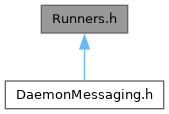
Definition in file Runners.h.
| std::expected< mqss::QuantumResult, Error > mqss::qrmci::buildQuantumResult |
( |
const mqss::QuantumTask & | task, |
|
|
const std::vector< std::optional< mqss::submitter::Counts > > & | histogram ) |
|
nodiscard |
Build a QuantumResult from a task and its job-result histogram, the shared tail end of submitQuantumTask()+collectQuantumResult() and executeQuantumTask().
histogram's length must equal task's circuit file count, and every entry must carry counts: cardinality is preserved rather than collapsed, so the result has exactly one entry per circuit, in the same order, on success. Every count must also fit in the wire format's int32_t. Validated up front, before anything is written to the result, so a failure never returns a partially assembled QuantumResult.
- Parameters
-
| task | The quantum task the histogram belongs to (used to populate the result's task/destination/QPU fields). |
| histogram | One counts map per circuit file, or nullopt for a circuit that produced no counts. |
- Returns
- An expected QuantumResult containing one result entry per circuit, or a DeviceError if the histogram's length does not match the task's circuit count, any entry is nullopt, or any count exceeds INT32_MAX – each case naming the offending circuit index, or bitstring and value.
| std::expected< mqss::QuantumResult, Error > mqss::qrmci::collectQuantumResult |
( |
const mqss::QuantumTask & | task, |
|
|
std::vector< mqss::submitter::Job > & | jobs, |
|
|
std::chrono::seconds | waitTimeout, |
|
|
const std::atomic< bool > & | terminationFlag ) |
|
nodiscard |
Interruptible overload of collectQuantumResult(), for a daemon work loop composing its own termination flag.
Each job is waited on in slices of at most one second rather than in one blocking call, so terminationFlag is checked, and a shutdown honoured, between slices instead of only before the whole wait. A zero waitTimeout still waits indefinitely absent a shutdown, but is now interruptible rather than truly unbounded; a positive waitTimeout still times out at the same total deadline as the three-argument overload.
- Parameters
-
| task | The quantum task the jobs were submitted for. |
| jobs | The jobs returned by submitQuantumTask(), waited on in order. |
| waitTimeout | How long to wait for each job; zero waits indefinitely. |
| terminationFlag | Consulted before every wait slice. |
- Returns
- An expected QuantumResult as the three-argument overload describes, or ShutdownRequested if
terminationFlag was set before every job finished.
| std::expected< std::vector< mqss::submitter::Job >, Error > mqss::qrmci::submitQuantumTask |
( |
const mqss::QuantumTask & | task, |
|
|
const mqss::submitter::Device & | device ) |
|
nodiscard |
Submit the quantum task's circuits to the device without waiting for their results.
Pairs with collectQuantumResult() to let a caller submit several tasks back-to-back before collecting any of their results (pipelined batch submission), instead of blocking on each task's result in turn the way executeQuantumTask() does.
A Job carries exactly one payload, so a task with N circuit files becomes N jobs, submitted in the files' own order and returned in that order. The first submission failure short-circuits without waiting on or collecting any job already submitted for this task.
Uninterruptible: unsuitable for a daemon work loop that must shut down promptly. Delegates to the three-argument overload with a flag that is never set.
- Parameters
-
| task | The quantum task to submit. |
| device | The device to submit to. |
- Returns
- The submitted jobs, one per circuit file, or a SubmissionFailed error – which also covers a task with no circuit files or a zero shot count, both refused before the device is touched.
| std::expected< std::vector< mqss::submitter::Job >, Error > mqss::qrmci::submitQuantumTask |
( |
const mqss::QuantumTask & | task, |
|
|
const mqss::submitter::Device & | device, |
|
|
const std::atomic< bool > & | terminationFlag ) |
|
nodiscard |
Interruptible overload of submitQuantumTask(), for a daemon work loop composing its own termination flag.
terminationFlag is checked before each circuit's submission. If it is set, every job already submitted for this task is best-effort cancelled (a cancellation failure is logged, not propagated) and the call returns Error::Kind::ShutdownRequested instead of submitting the rest.
- Parameters
-
| task | The quantum task to submit. |
| device | The device to submit to. |
| terminationFlag | Consulted before every circuit submission. |
- Returns
- The submitted jobs, one per circuit file; a SubmissionFailed error as the two-argument overload describes; or ShutdownRequested if
terminationFlag was set before every circuit could be submitted.

 1.15.0